Tracking Checked · 2 min · 4 sources
Continuous glucose monitors without diabetes: what they can and can't tell you
A sensor on the arm reads your glucose every minute. For type 2 diabetes the trials show a modest benefit; for people without diabetes, the evidence is thin.
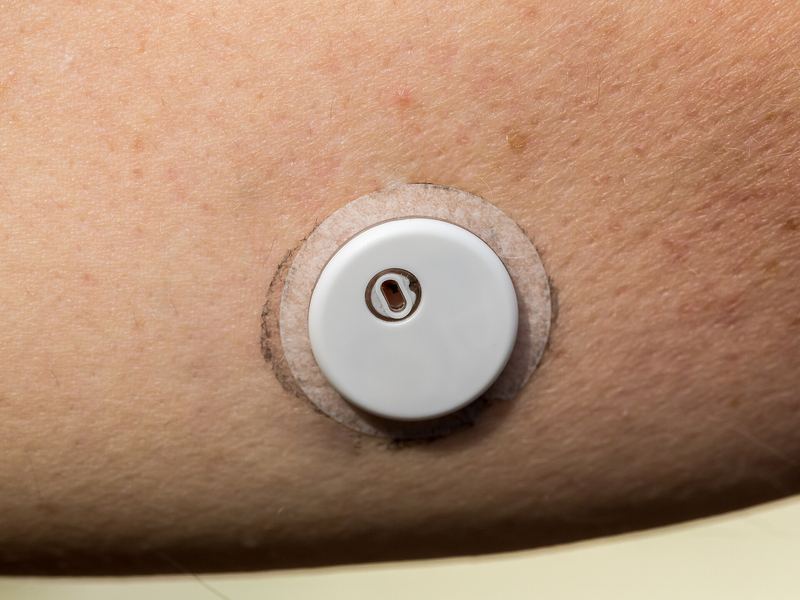
A continuous glucose monitor, or CGM, is a coin-sized sensor worn on the back of the upper arm, with a fine filament under the skin. It reads glucose levels around the clock and sends them to a phone. Built for people with diabetes, CGMs are now worn by people without it who want to see how food, sleep and exercise move their blood sugar.

In diabetes
The evidence is clearest here. A 2024 meta-analysis in Diabetologia found that in adults with type 2 diabetes, CGM lowered HbA1c, the three-month measure of blood sugar, by about 0.3 percentage points compared with finger-prick testing, with moderate certainty. It made no significant difference to severe hypos or heart complications.
Without diabetes
A 2024 review in the International Journal of Behavioral Nutrition and Physical Activity looked at CGM as a tool for changing behaviour, in people with and without diabetes. Feedback from a CGM lowered HbA1c by 0.28 percentage points and increased time in the target range, effects the authors called favourable but modest. The trials varied widely, and few involved people without diabetes.
In Australia
Diabetes Australia says the FreeStyle Libre 2 Plus sensor, worn for 15 days, is available to all Australians with diabetes aged two and over. Eligible people get CGM sensors subsidised through the National Diabetes Services Scheme. People without diabetes can buy sensors privately.
Yes, but
Glucose rises after meals in everyone. Without a diagnosis or a clear goal, a stream of spikes can cause worry without changing anything that matters, and the trials have not shown that healthy people who wear one end up healthier.
When to talk to your GP
If your readings are consistently high, or if you think you might have diabetes: a blood test, not a wearable, makes the diagnosis.
Sources
- Continuous glucose monitoring in adults with type 2 diabetes: a systematic review and meta-analysis, Diabetologia, 2024
- The efficacy of using continuous glucose monitoring as a behaviour change tool in populations with and without diabetes, Int J Behav Nutr Phys Act, 2024
- The FreeStyle Libre 2 Plus sensor is now available for all Australians with diabetes, Diabetes Australia
- Accessing the NDSS CGM subsidy, FreeStyle Libre Australia
General information, not medical advice. Check with your GP first, especially if you are pregnant, have a heart condition or take medication.
Read next
- TrackingOura Ring and WHOOPMixed evidence
- ClinicsDEXA scanModerate evidence
- SupplementsNMN and NAD+Not shown in trials